It's Time to Stop Self-Sabotaging Your Golf Practice
Most amateur or beginner golfers probably get confused on what the driving range is actually meant for.
Sure, it's supposed to give you confidence, but that doesn't come from beating ball after ball for 90 minutes before the bucket's empty. So if your golf practice looks something like that, you're doing it wrong.
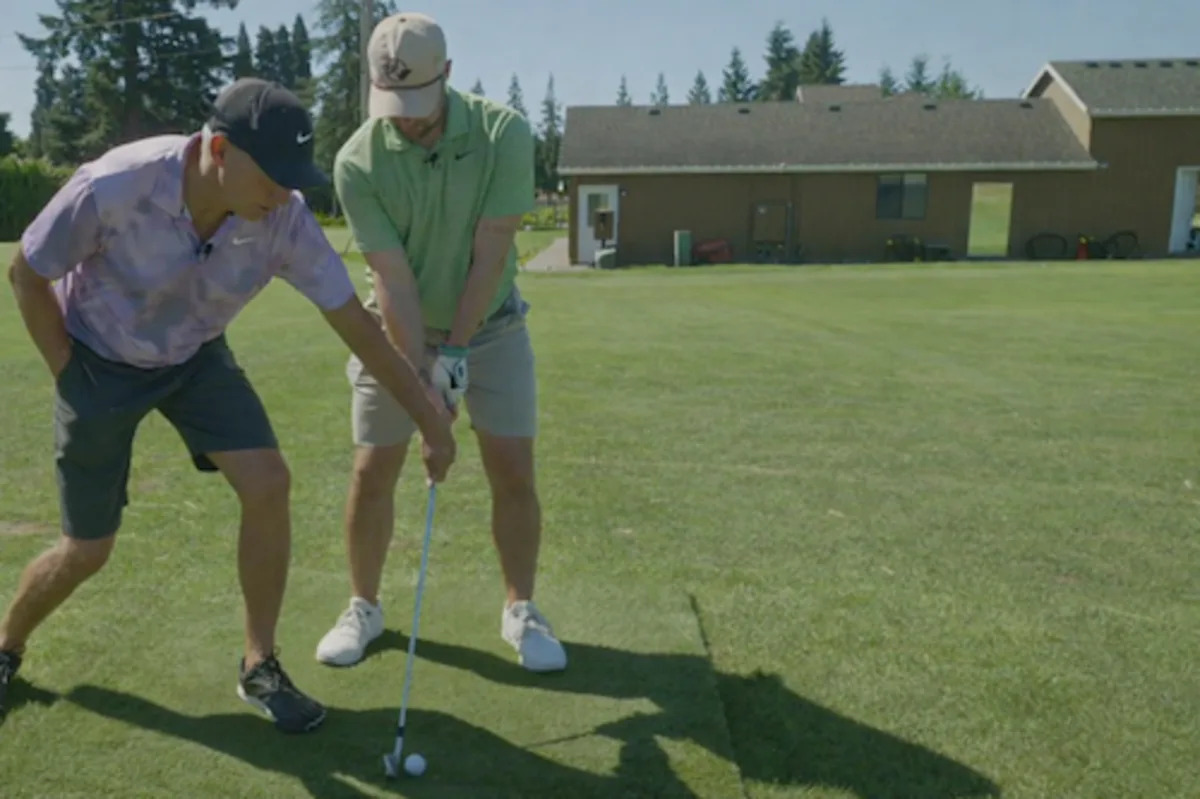
How to Build a Better Golf Practice PlanDuring a recent golf lesson with top-ranked coach Christopher Smith, I was reminded why my golf practice needed a facelift: Because I was self-sabotaging myself!
There was zero structure, no intent, and I wasn't locked in or focused on what I was doing.
But you wouldn't go into a test without studying, right? Similarly, you shouldn't go to the driving range without a plan — and Smith demanded I changed my routine in order to see the improvements I want.
Quit Making these Mistakes During Golf PracticeAs the video above shows, Smith has be working on a few different golf swing tips and adjustments, focusing on properly rotating and not swaying in my swing.
Problem is, I'd react to every mis-hit, would occasionally glance at my phone, and didn't truly understand that practice was just that, practice!
Smith noticed that early on in the lesson, saying, "this is a perfect example of somebody trying to learn something new that will allow you to hit it better long-term."
Notice those last two words: "Long term" — not immediately after making adjustments.
When you're learning something new on the driving range, it's highly unlikely that you're going to immediately master it. So expect to have some growing pains — an issue that most amateur or beginner golfers overlook.
Adds Smith, "I don't care if you hit it crappy now, because I don't want you to be results oriented."
As the lesson continues, Smith and I discuss how golf practice is often mistaken for performance practice, and how too many golfers ruin themselves by "hitting one more good one before leaving" because they think that's progress.
In reality, each range session should be intentional and focused on adjustments, not just seeing 275-yard bombs off the tee over and over again.
"If you're trying to do something new on the driving range, but the ball on a tee," Smith says. "Most people will tell me, 'I don't hit off a tee when I'm playing,' but you're not playing right now; you're in a learning environment, not a performance environment.
"Now if you're hitting balls before a round and are warming up, then you make [golf practice] a little more realistic," Smith adds.
How to Change Your Expectations During PracticeMidday through the lesson, I give Smith a realistic scenario that most golfers face during golf practice: With 20 golf balls, how do you change your mindset from focusing on the outcome to focusing on the process?
Smith said the goal would be to rehearse any new changes or swing adjustments first, ensuring you go through a process before hitting each ball.
"I'd have you rehearse and practice three times slowly, maybe trying different holding positions and even closing your eyes, then I'd have you hit one," he shares.
"Where most people go wrong is they try to immediately try to do the new thing at full speed with a full swing and with a golf ball — and then they fail."
This is where trusting the process is so important, understanding that these changes aren't supposed to happen overnight, but with repetition, they'll eventually make you a better golfer.
"If you commit to the process, you'll like the results," Smith tells me. "We all do this, but after hitting a couple crappy shots, we pull up Instagram and see if there's something better that can help me.
"So it's so important to be with someone credible that you trust, and you have to understand that you might get a little worse before you get better — but you have to commit to it."
Even as the golf lesson continues, Smith has me go through the new process and even swing half speed, with many of my shots producing a poor result. He reminds me that it's part of actually practicing golf, and being patient with the swing changes I'm making.
At one point, Smith even has me close my eyes and stop my golf swing at the top, saying I'll feel the changes more when my eyes are shut.
Finally, Smith says that, when learning something new, you should expect to have some great shots mixed with some really bad shots — but to use the confidence of the good results to keep trying to improve.
"You'll hit some better than you ever have, and then you'll hit some awful ones — which just means you're trying to do something new," Smith shares. "Eventually [by trusting the process and your practice plan], the bad ones get better."
So for most players who can't seem to differentiate between just hitting golf balls on the driving range and proper golf practice, hopefully the lesson with Smith gives you a better plan with more intent — while managing expectations about results.
Be sure to subscribe to Rainmakers Golf on YouTube for more relatable golf tips, golf instruction, and swing advice to help your game improve.
This story was originally published by Athlon Sports on Jan 14, 2026, where it first appeared in the Golf section. Add Athlon Sports as a Preferred Source by clicking here.