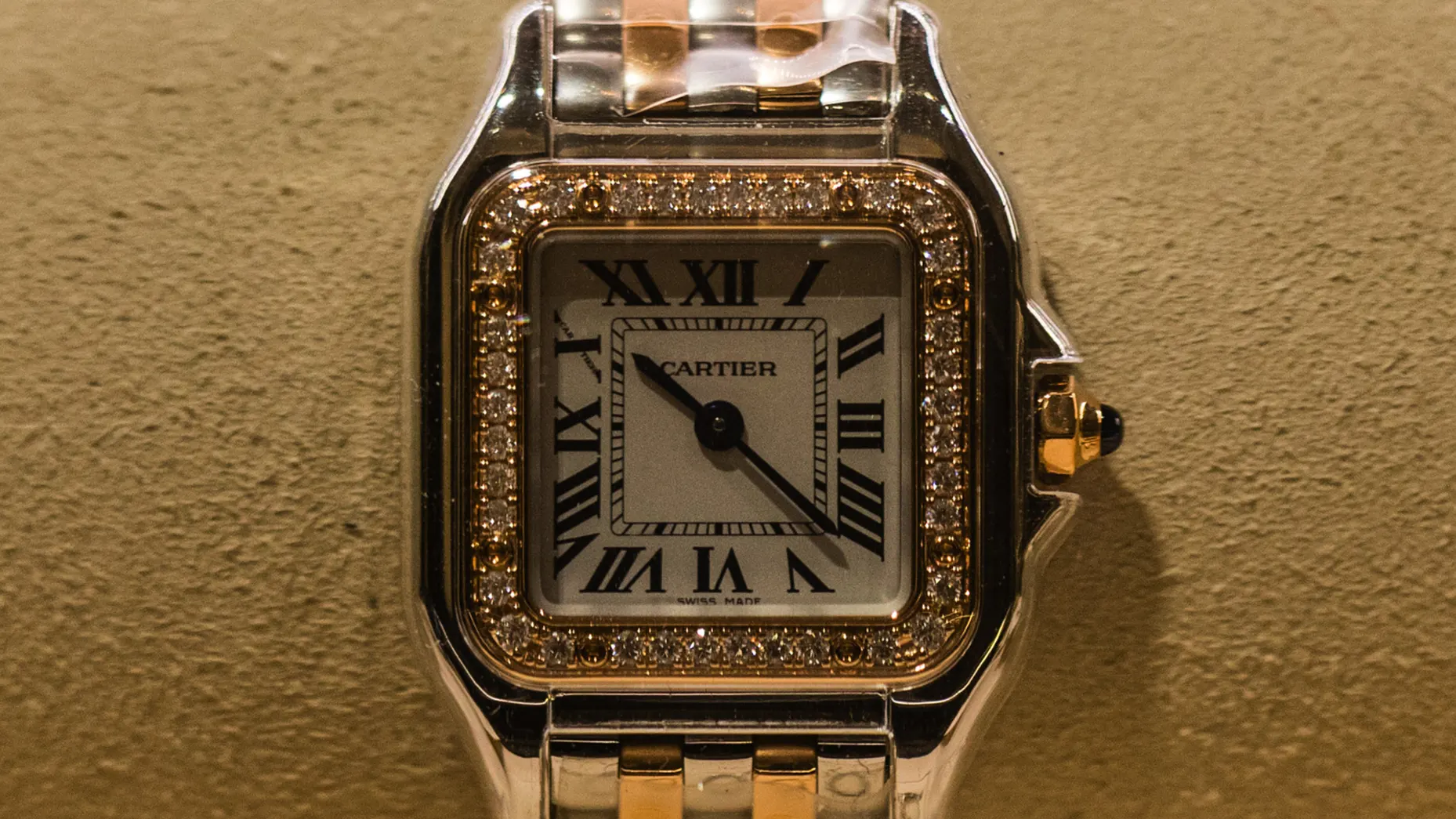
Cartier owner Richemont posts earnings beat as shoppers splurge on jewelry despite luxury slowdown

Geneva — Cartier-owner Richemont delivered a resilient performance to close its fiscal year, posting better-than-expected fourth-quarter sales as its core jewelry business continued to attract the world's wealthiest shoppers amid broader luxury sector uncertainty. The results provided a rare bright spot, sending shares up nearly 7% even as competitors like LVMH grapple with significant declines.
Group sales rose 7% at constant exchange rates to 5.17 billion euros ($5.79 billion) in the quarter, surpassing analyst forecasts. Full-year sales reached 21.4 billion euros, a 4% increase. This strength was almost entirely driven by double-digit growth at its prestigious Jewellery Maisons division, home to brands like Cartier and Van Cleef & Arpels.
A Tale of Two Segments: Jewelry Shines, Watches Wane
The earnings report highlighted a sharp divergence within the company. While the high-margin jewelry business thrived, the specialist watchmakers segment, which includes Piaget, saw sales decline, primarily due to weakness in the Asia-Pacific region. Geographically, performance was mixed: Japan led with 25% annual growth, buoyed by tourism and a weak yen, while sales in China—its largest market—fell 23%.
This contrast underscores a key strategic pivot in the luxury market: ultra-high-end, timeless jewelry pieces are proving more resilient to economic and political headwinds than some discretionary watch categories. Richemont's performance suggests that the absolute apex of the market remains insulated, engaging in its own high-stakes race for the loyalties of the global elite.
Navigating Persistent "Global Uncertainties"
Despite the positive quarter, Chairman Johann Rupert cautioned that ongoing "global uncertainties" demand "strong agility and discipline." Analysts point to a trio of headwinds: soaring gold prices, the threat of U.S. tariffs, and unfavorable foreign exchange movements, particularly the strength of the Swiss Franc.
However, Richemont's formidable pricing power is seen as a critical buffer. Bank of America analysts noted, "We think price will cover half the headwinds," highlighting that premium brands can use strategic repricing and product mix to offset external pressures—a crucial advantage in a volatile competitive ecosystem.
A Bellwether for Resilient High-End Demand
Richemont's results offer a nuanced read on the luxury sector. They confirm severe weakness in China and in certain product categories, aligning with the challenges reported by peers. Yet, they also demonstrate that the very top tier of the market, centered on iconic jewelry brands, can still grow. This bifurcation indicates that any sector-wide recovery may be uneven and led by the most powerful houses with unshakeable brand equity.
For Richemont, maintaining this momentum will require the deft strategic maneuver of leveraging its jewelry strength to stabilize the wider business, all while navigating the same macroeconomic and geopolitical storms buffeting its rivals.