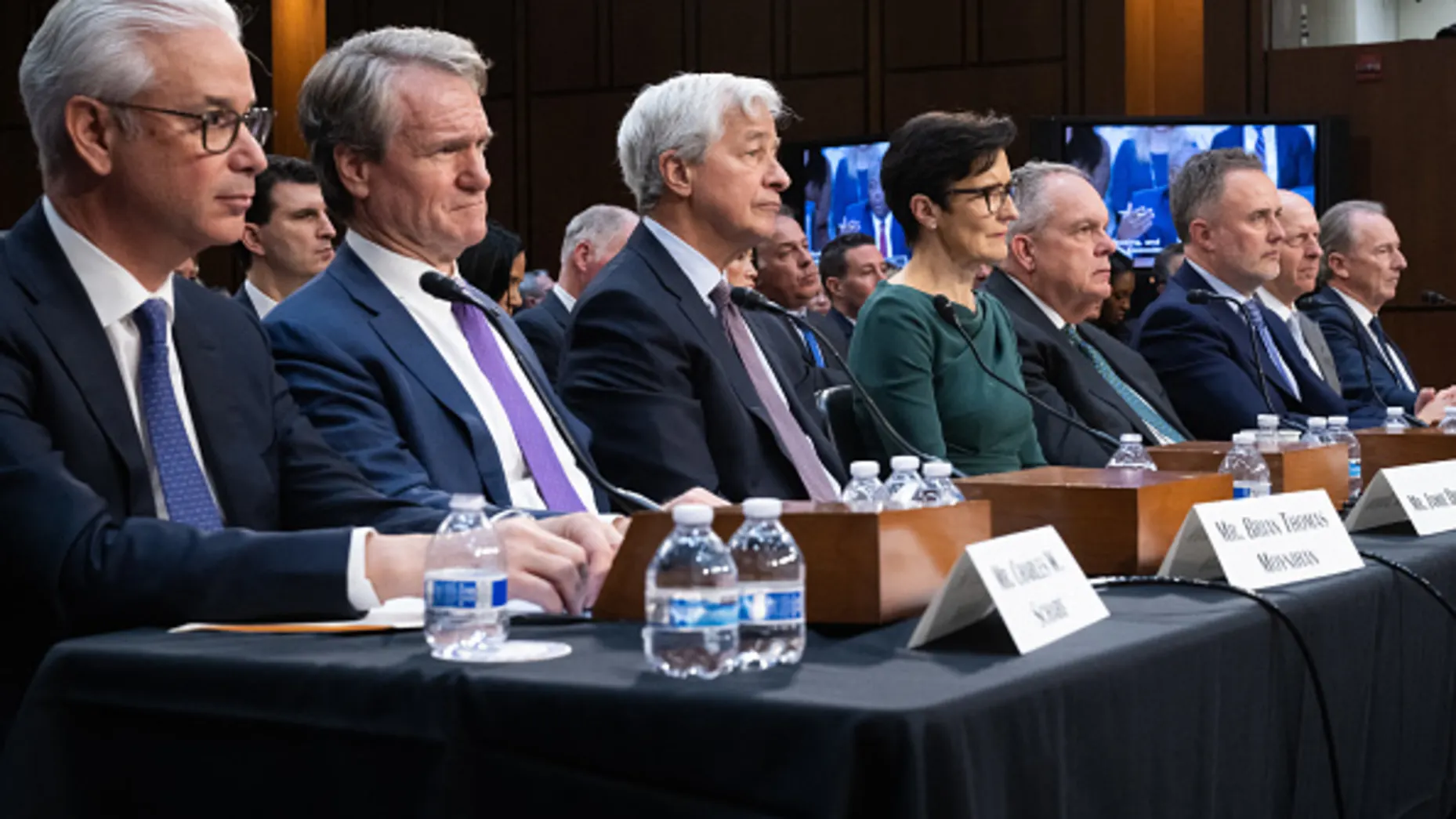
Trump’s credit card rate cap plan has unclear path, ‘devastating’ risks, bank insiders say
The banking sector is facing intense pressure following President Donald Trump's late-Friday declaration that credit card interest rates would be capped at 10%, a move that sent shares of major financial institutions tumbling and sparked warnings of severe economic repercussions.
President Trump proposed a one-year cap effective January 20, asserting control over consumer finance costs. The announcement triggered a broad market sell-off on Monday. Capital One, with a loan book heavily concentrated in credit cards, plunged nearly 7%. Shares of large universal banks like Citigroup, JPMorgan Chase, Wells Fargo, and Bank of America fell between 1% and 3%, while payment networks Visa, Mastercard, and American Express also declined.
The industry is pushing back forcefully, arguing the policy would render a significant portion of the credit card business unprofitable and ultimately harm consumers. With the national average credit card rate currently at 19.7%—and substantially higher for subprime borrowers—banks warn they would be forced to restrict credit access.
"We cannot offer products at a loss; there’s no scenario where we would take our entire portfolio to 10%," said an anonymous executive at a large bank. "It’s not a stretch to suggest this will very quickly tank the economy."
Analysts and industry insiders predict that rather than absorb losses, issuers would shut down accounts for consumers with subprime credit, scale back lucrative rewards programs, and tighten lending standards broadly. A study released Monday by the Electronic Payments Coalition estimated a 10% cap could lead to account closures for nearly 90% of current card users, or 175 million Americans.
The downstream effects could ripple across the economy. KBW analysts noted that reduced consumer spending power would hit airlines, retailers, and restaurants, which might then raise prices to compensate for lost card revenue. Consumers could also be pushed toward alternative, often costlier forms of unsecured debt.
Uncertain Enforcement Path Creates Confusion
A major point of contention is the mechanism for enforcement. Legislative action through Congress is not feasible by the January 20 deadline, according to policy analysts. Alternative routes, such as action by the Consumer Financial Protection Bureau, are seen as unlikely given the administration's past efforts to dismantle the agency and the industry's successful legal challenges against its rules.
"I’m not aware of an authority that they can use to do this unilaterally," said Tobin Marcus, head of U.S. policy at Wolfe Research, suggesting the announcement may be an attempt to pressure banks into voluntary compliance.
The proposal echoes a stalled congressional bill from Senators Josh Hawley and Bernie Sanders but accelerates the timeline dramatically. For an industry already grappling with rising consumer debt—which reached $1.23 trillion in the third quarter of last year—the announcement injects significant uncertainty.
As KBW analyst Chris McGratty questioned, "Is 10% an opening bid? There’s a long distance between 10% and what companies charge today." The financial sector now braces for a potential negotiated compromise, facing the prospect that the era of high-margin credit card lending may be forcibly coming to an end.