Aldi Accelerates U.S. Expansion as Discounters Reshape the Grocery Landscape
Amid relentless inflation pressure, German discount grocer Aldi is launching its next major offensive in the American market, planning to open more than 180 new U.S. stores this year. This aggressive expansion targets the core territories of traditional supermarket chains and big-box retailers, capitalizing on a profound shift in consumer behavior toward value and efficiency.
The move follows a record year of growth in 2025, during which Aldi opened nearly 200 locations—its largest annual expansion since entering the U.S. in 1976. With 2,614 stores nationwide as of December 31, Aldi now ranks as the country's third-largest grocer by store count, trailing only Walmart and Kroger. Its strategy extends beyond new footprints; the company will relaunch its website, enter Maine as its 40th state, and build new distribution centers in Florida, Arizona, and Colorado over the next five years.
“Consumers now really are not looking for fancy stores, and tens of thousands of different items to choose from,” said Atty McGrath, CEO of Aldi U.S. “They’re really savvy shoppers. They know that private labels can save them money without sacrificing quality.”
This sentiment is reflected in shifting market dynamics. A recent AlixPartners survey revealed a notable decline in the share of grocery spending within the traditional supermarket channel across all demographic groups year-over-year, with the sharpest drops occurring among affluent households (earning over $100,000 annually) and younger shoppers (ages 25-34).
“U.S. customers have learned that if you go to a discounter, you’re not buying crap cheaply,” said Matthew Hamory, co-leader of the global grocery practice at AlixPartners. He noted that large chains like Kroger, Albertsons, and Ahold Delhaize are losing ground as discounters win on price, quality, and convenience for staples.
Despite its rapid growth, Aldi's overall market share remains modest at 2.8%, according to Numerator data. However, its momentum is undeniable. Store traffic surged more than 50% from 2019 to 2024, and in 2025, its 8% year-over-year visit growth far outpaced the broader grocery sector (3.1%) and major rivals like Costco (5.9%), Kroger (0.8%), and Walmart (0.5%).
The competitive pressure is palpable. Albertsons recently issued a weak full-year forecast, with CEO Susan Morris noting that even higher-income shoppers are “becoming more conscious of price and value.” Kroger's interim CEO, Ron Sargent, has emphasized plans to strengthen its competitive position through price investments and accelerated store growth.
The Aldi Model: Efficiency as a Virtue
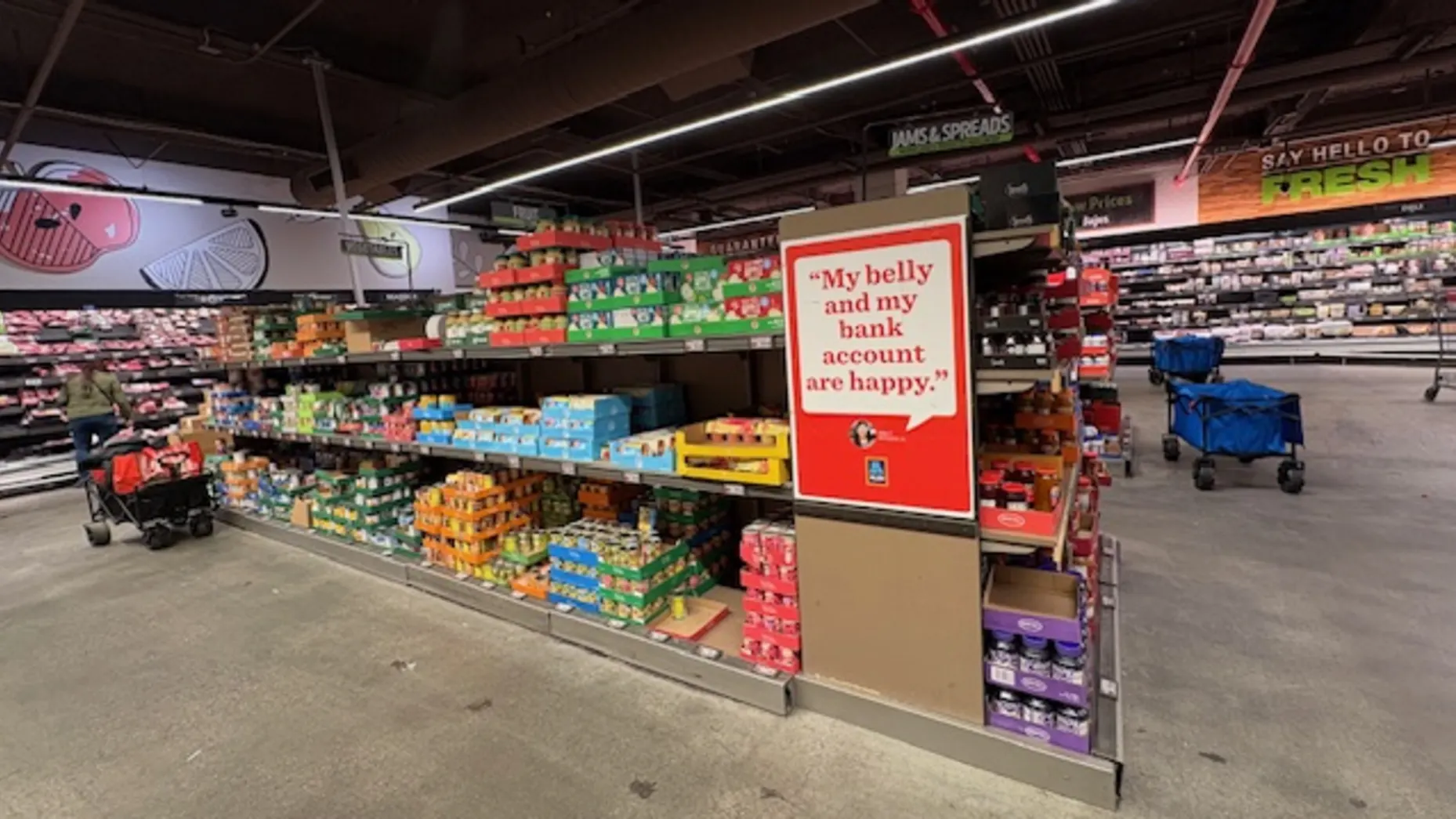
Aldi’s success is built on a distinct, efficiency-driven model. Its stores average about 10,000 square feet—a fraction of a Walmart supercenter's size—and stock a curated selection where over 90% of items are private label. Operational quirks like a quarter deposit for shopping carts, limited staffing, and merchandise displayed in shipping boxes all contribute to lower costs.
“What we want our customers to do is shop Aldi first,” said Scott Patton, Chief Commercial Officer of Aldi U.S., acknowledging that shoppers may need to visit another store to complete their list. The model is complemented by a “treasure hunt” experience in the store's center aisles, which feature limited-time non-grocery items from air fryers to holiday sweaters.
This approach has cultivated a devoted, almost subcultural following. “It’s become a personality trait, for better or worse, my undying devotion to the brand,” said Emily Curtis, a 27-year-old New Yorker who drives 30 minutes each way to her nearest Aldi.
However, the strategy is not without controversy. Aldi faces a lawsuit from Mondelez, alleging it copies the packaging of national brands like Oreo and Chips Ahoy to confuse shoppers—a claim the company denies, stating a recent packaging revamp was independent of legal challenges.
As Aldi and fellow discounter Lidl continue their expansion, they are fundamentally reshaping U.S. grocery retail, forcing entrenched players to rethink value propositions in an era where frugality is no longer just a necessity for budget-conscious households, but a calculated choice for an increasingly broad swath of American consumers.