What is Ja Morant's trade value? Here are 6 potential deals for the Grizzlies' star guard
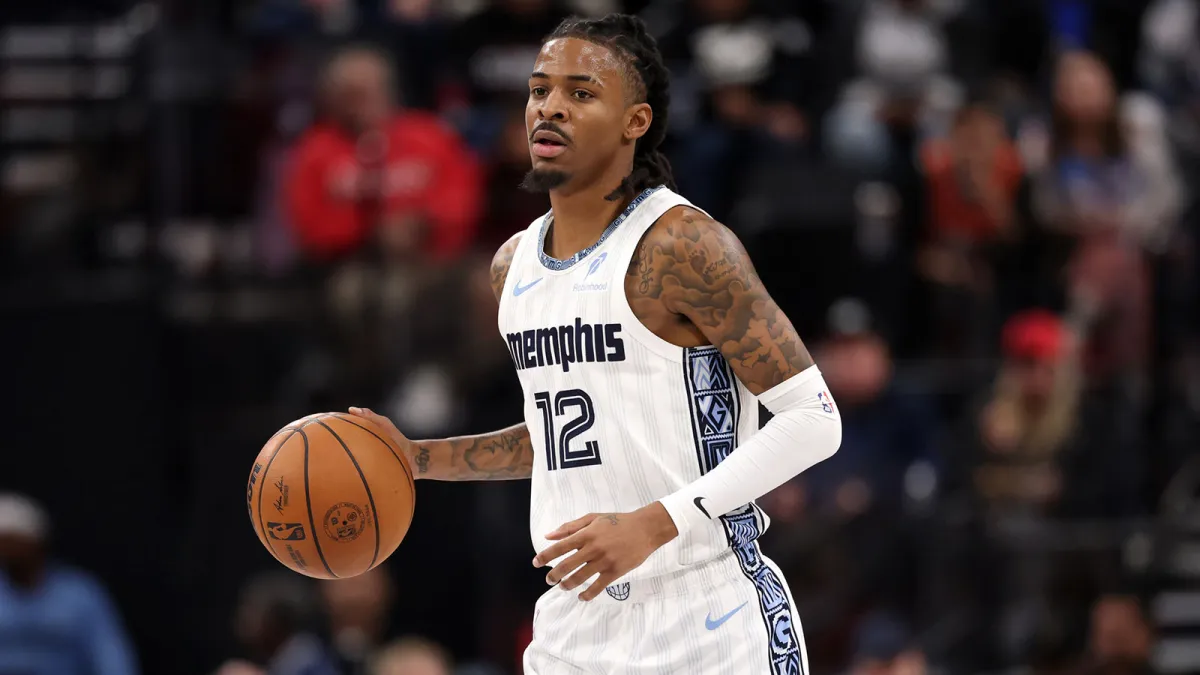
Just three years after being hailed as the NBA's most electrifying guard since Allen Iverson and the centerpiece of a Memphis Grizzlies team on the rise, Ja Morant finds himself at a career crossroads. A troubling series of off-court gun incidents, compounded by persistent injuries and on-court regression, has dramatically diminished his value. The Grizzlies are now reportedly willing to listen to trade offers for the 26-year-old guard, but the market views him as a distressed asset rather than a franchise cornerstone.
Performance and Risk Profile
Morant's game has shown significant cracks. Even during his back-to-back All-Star seasons, his defense, shooting, and playmaking were considered inconsistent. Since then, those areas have regressed. More concerning has been his reluctance to leverage his elite athleticism, partly to avoid further injury. Early this season, only 18% of his shots came at the rim—a career low—while he hoisted inefficient three-pointers at a 31% rate.
A recent six-game sample since returning from a calf strain offers a flicker of hope: his shot distribution (36% at the rim) and scoring efficiency have realigned with his peak years. However, this comes against a bleak backdrop: Morant has played in just 77 of a possible 203 games over the last three seasons while carrying a hefty contract ($39.5M this year, $43.5M annually for the following two).
The Trade Calculus
NBA executives anticipate Morant’s market will mirror that of Trae Young’s recent trade—yielding limited return, likely involving pick swaps and role players rather than unprotected first-round picks or premium young talent. Memphis is signaling a willingness to absorb bad contracts if compensated with future assets, but the return is expected to be modest.
Potential suitors generally fall into three categories: stuck-in-the-middle teams seeking a shortcut, desperate franchises, and confident organizations believing they can rehabilitate his career. Proposed trade frameworks illustrate the constrained market:
Sacramento Kings: Receive Morant; send DeMar DeRozan, Devin Carter, Dario Šarić, and two pick swaps. A high-risk swing for a star-needy team.
Phoenix Suns: Receive Morant; send Jalen Green and a 2032 pick swap. Addresses Phoenix’s need for rim pressure but gambles on fit and availability.
Toronto Raptors: Receive Morant; send Immanuel Quickley, Gradey Dick, and a pick swap. A questionable fit alongside paint-centric Scottie Barnes.
Milwaukee Bucks: Receive Morant; send Kyle Kuzma, Bobby Portis, and two pick swaps. A desperate Hail Mary to retain Giannis Antetokounmpo.
Miami Heat: Receive Morant; send Terry Rozier, Simone Fontecchio, and two pick swaps. The ultimate "Pat Riley fixer-upper" gamble, albeit with clear cultural risks.
Minnesota Timberwolves: Receive Morant, Jock Landale, Scotty Pippen Jr., Vince Williams Jr.; send Naz Reid, Donte DiVincenzo, Mike Conley, Joan Beringer, and a 2032 swap. A major roster reshuffle that could raise the ceiling but disrupt chemistry.
The Iverson Parallel and the Path Ahead
Morant’s career arc is accelerating toward a sobering historical parallel: the sharp, premature decline of high-usage small guards like Allen Iverson. While his youth offers a sliver of hope for a revival, the overwhelming evidence points to a player whose physical decline and off-court baggage may have already severely capped his value.
For any team considering a move, acquiring Ja Morant represents a gamble on redemption at a discounted price—but one with a high probability of becoming a costly mistake. As the trade deadline approaches, the league will learn whether any franchise is willing to bet that the former superstar still has a prime left to reclaim.