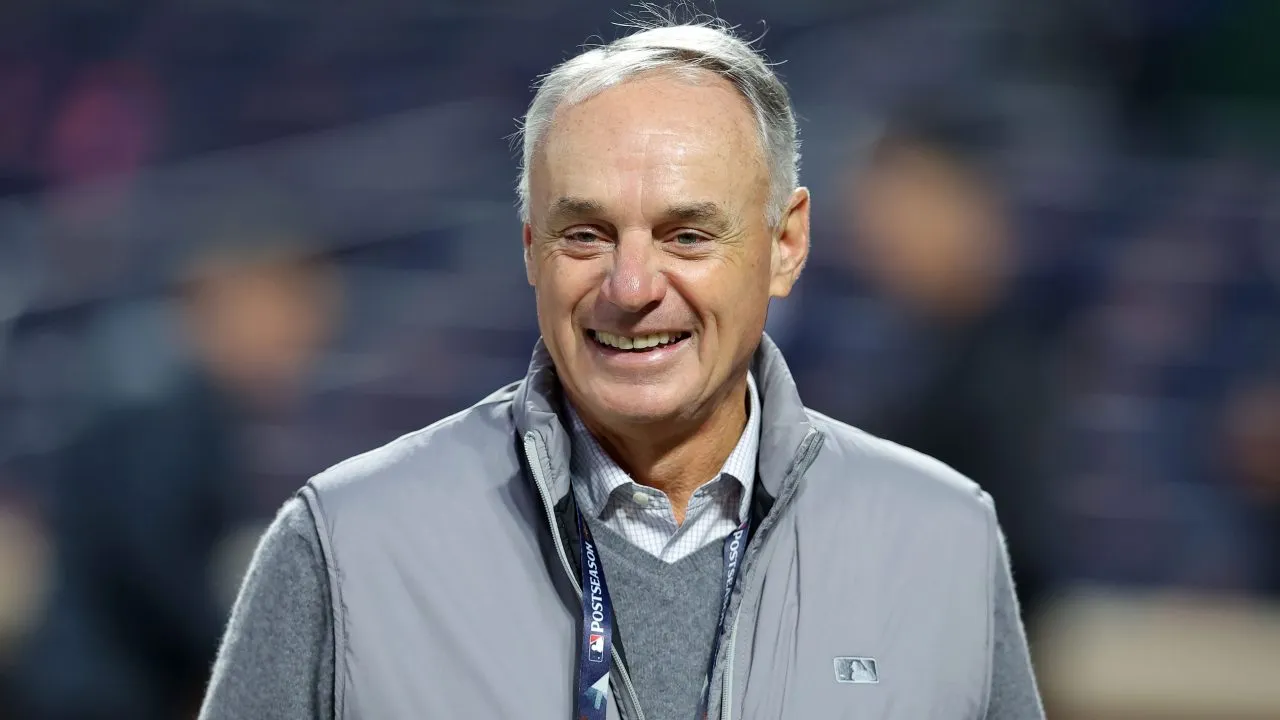
Rob Manfred floats MLB realignment with American and National Leagues replaced by East vs. West
MLB Commissioner Rob Manfred has outlined an ambitious vision for the league's future, strongly advocating for expansion to 32 teams followed by a complete geographic realignment of the divisions. Speaking on WFAN's "The Carton Show," Manfred framed the changes as a way to improve player health, optimize the postseason schedule, and meet fan demand in new markets.
The core of the proposal involves shifting from the traditional American and National League structure to an East-West format with eight divisions of four teams each, organized geographically. "You would realign, you would do it along geographic lines, which could alleviate a ton of the travel burden that's on players," Manfred said, emphasizing the grueling nature of a 162-game schedule. He argued that reducing cross-country travel would benefit player health and safety.
Addressing the "Prime-Time" Problem for Fans
Manfred also highlighted a significant fan experience benefit. Under the current setup, playoff series often pair teams from opposite coasts, resulting in start times that are inconvenient for one market. A geographic realignment, he suggested, would create playoff paths where Eastern and Western teams advance separately to the World Series, allowing for more prime-time-friendly start times for local fans. "That 10 o'clock game on the West Coast that sometimes is a problem for us becomes a prime-time game on the West Coast for the two teams that are playing," he explained.
While expansion cities were not officially named, Manfred has previously stated his intention to select two locations before his planned retirement in 2029. Speculation often centers on cities like Nashville and Portland. A sample realignment—placing the Seattle Mariners, a Portland expansion team, San Francisco Giants, and Los Angeles Dodgers in one division, for example—illustrates how radically the competitive landscape could change, though many historic rivalries would be disrupted.
Balancing Innovation with Tradition
Manfred acknowledged the complexity of altering a 125-year-old league structure and touched on other potential innovations, like an in-season tournament similar to the NBA Cup. However, he expressed caution, noting that such a tournament might require reducing the number of regular-season games, which would conflict with the sport's cherished season-long records. "You're playing around with something that people care a lot about," he said.
With Manfred confirming his intent to retire when his contract expires in January 2029, his successor could inherit a league that looks profoundly different—larger, less burdened by travel, and organized for modern media consumption and fan engagement, marking one of the most significant transformations in baseball's modern era.